Spray Foam vs. Blown-In Insulation: Which Is Best for Arizona's High-Desert Heat?
Spray foam and blown-in are the two insulation types Yavapai County homeowners weigh against each other most, and for good reason — both perform well in high-desert heat, but they do it differently, and one usually makes more sense for your specific attic. Here's a clear, honest comparison so you know which belongs in your Dewey-Humboldt, Prescott, or Prescott Valley home.
How they perform against Arizona heat
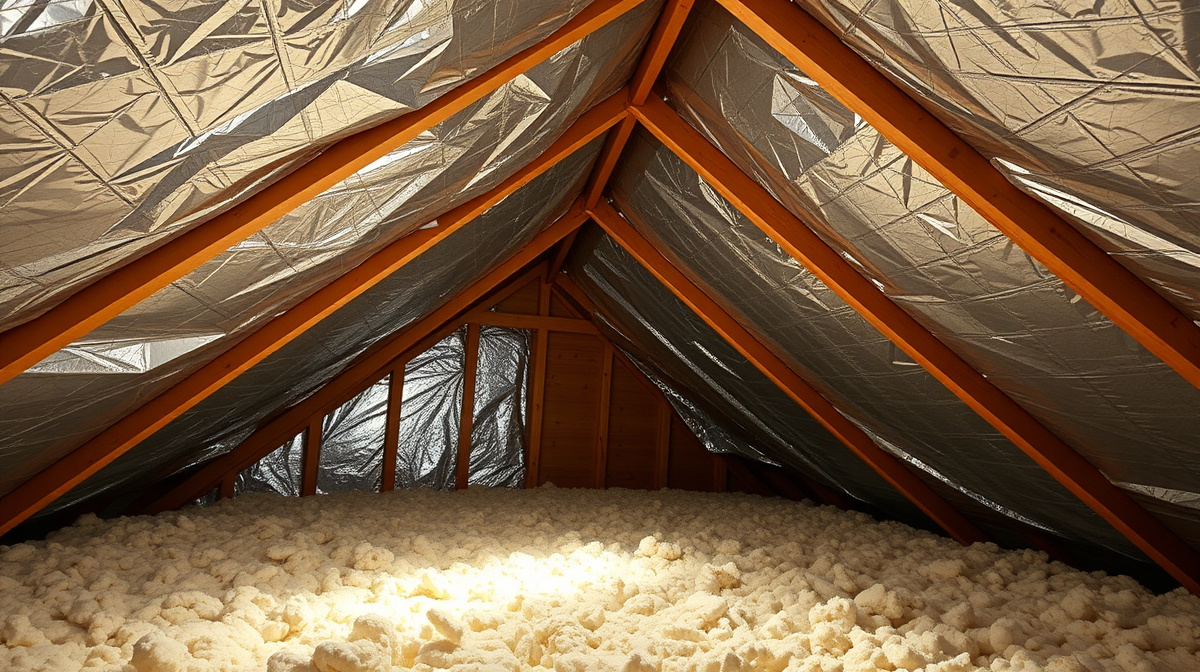
Blown-in cellulose or fiberglass sits on the attic floor and slows heat conduction between the scorching attic above and your living space below. Cellulose in particular holds its rated R-value better than fiberglass once attic temperatures climb into the 140–160°F range that's routine here in July and August — fiberglass can lose a meaningful chunk of its effective R-value under sustained extreme heat, while dense-packed cellulose holds up more consistently. Either way, blown-in only works as well as the air seal beneath it; heat and dust move through gaps no matter how thick the insulation piled on top is.
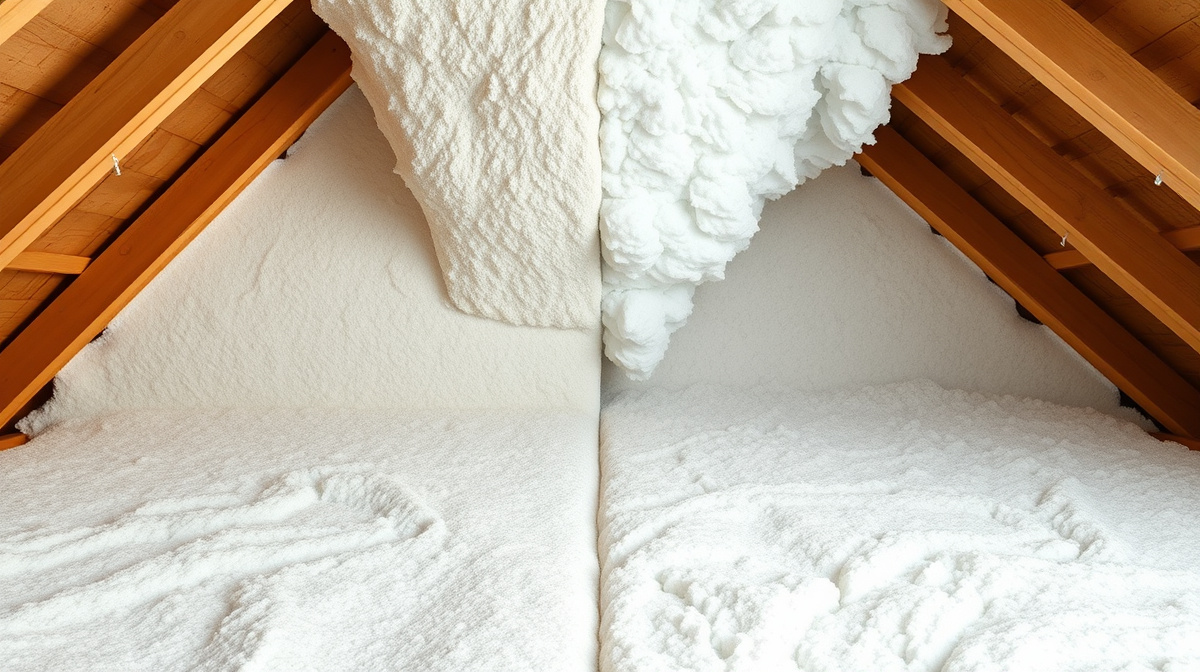
Closed-cell spray foam takes a different approach. Instead of just slowing heat conduction, it air-seals and insulates in a single step, delivering roughly R-6 to R-7 per inch — nearly double the R-value per inch of loose-fill material. That combination of air seal plus high R-value per inch is what makes spray foam the go-to choice when you're fighting both heat gain and gaps at once, such as an attic with a lot of penetrations, a garage ceiling under direct sun, or a roof deck application.
Roof-deck vs. attic-floor: the decision that matters most
This is the choice that actually determines which product wins, more than any head-to-head R-value comparison. Attic-floor insulation — the traditional approach — is installed on top of the ceiling below, leaving the attic itself a vented, unconditioned space that gets extremely hot. Blown-in is built for exactly this application: it fills an irregularly framed attic floor evenly and, paired with proper soffit-and-ridge ventilation, keeps that brutal attic heat from radiating down into your living space.
Roof-deck insulation — spraying closed-cell foam directly to the underside of the roof sheathing — takes the opposite approach. It brings the attic inside the home's thermal and air boundary, creating a sealed, unvented attic that runs much closer to indoor temperature instead of 150°F. This matters enormously in Yavapai County homes where HVAC ducts and the air handler live in the attic, which is extremely common in newer Prescott Valley and Chino Valley construction. Ducts sitting in a conditioned, sealed attic lose far less cooled air to the surrounding heat than the same ducts baking in a vented 150°F attic all summer.
Cost comparison
Blown-in is generally the more budget-friendly option for a standard attic-floor project, commonly landing well below spray foam on a per-square-foot basis for reaching R-38 to R-49 across a typical attic. Closed-cell spray foam costs more — often in the range of $1.50 to $5.00 per square foot depending on scope and whether it's attic-floor or full roof-deck application — because it's doing two jobs at once: air sealing and insulating. The smart approach isn't picking one for the whole house; it's using each material where its particular strength pays off fastest.
- Highest R-value per inch: closed-cell spray foam.
- Best air seal in one step: spray foam (blown-in still needs separate air sealing beneath it).
- Best value for a standard vented attic floor: blown-in cellulose or fiberglass.
- Best for attics with ducts and an air handler: roof-deck spray foam, converting the attic into conditioned space.
- Best for irregular, hard-to-reach framing: blown-in, which flows around obstructions.
- Best moisture and monsoon-wind resistance: closed-cell spray foam.
Monsoon season and wind-driven moisture
One more factor worth weighing that's specific to this part of Arizona: our July-through-September monsoon season brings humidity, dust, and genuinely wind-driven moisture that can push into an attic through the same gaps that leak conditioned air. Closed-cell spray foam's dense, sealed structure gives it a real edge here — it doesn't just slow heat, it blocks the wind-driven moisture and dust intrusion that a loose-fill product, even a well air-sealed one, is more exposed to. That's not a reason to rule out blown-in, which performs very well when properly air-sealed, but it's a point in spray foam's favor for a garage, roof deck, or any assembly directly exposed to storm-driven wind.
So which should you choose?
For most standard vented attics across Dewey-Humboldt, Prescott, and Prescott Valley, air-sealing first and then blowing in cellulose or fiberglass to R-38–R-49 delivers excellent performance for a sensible budget. For homes with ducts and an air handler living in the attic, a garage ceiling under direct sun, or a roof deck exposed to monsoon wind, closed-cell spray foam's air-sealing power and moisture resistance are usually worth the extra cost. Many of the best-performing homes we work on around Yavapai County actually use both — spray foam where air sealing and moisture resistance matter most, blown-in where broad attic-floor fill and value matter most.
Not sure which fits your house? We assess your attic, your ductwork, and your budget, then recommend the combination that actually makes sense instead of upselling one product across the board. Call 844-967-5247 for a free, no-pressure estimate.
Frequently asked questions
Not always. Spray foam has the highest R-value per inch and air-seals as it insulates, which makes it the stronger choice for roof decks, garages, and attics where ducts live in the attic space. But for a standard vented attic floor, blown-in with proper air sealing delivers strong, cost-effective performance for less money.
Yes, to a degree — fiberglass can lose a meaningful share of its effective R-value under the sustained 140–160°F attic temperatures common here in summer, while dense-packed cellulose tends to hold its rated performance more consistently. Either material still depends on proper air sealing to perform as expected.
It depends on whether your ductwork and air handler are in the attic. If they are, roof-deck application brings the attic into the home's conditioned space and protects duct performance. If the attic is just storage space with no equipment, attic-floor insulation (spray foam or blown-in) is usually the more cost-effective choice.
Ready for a free quote?
Tell us about your home and we'll build a clear quote — rebates included.