Insulation in Dewey-Humboldt & Prescott, AZ: 2026 Cost, R-Value & Rebate Guide
If you own a home anywhere between Dewey-Humboldt and Prescott, insulation is one of the highest-return improvements you can make — and one of the most confusing to price. Ask three contractors and you'll get three different numbers, three different R-value recommendations, and a vague wave at 'rebates that might apply.' This guide fixes that. We'll walk through what insulation actually costs by type in the Prescott area, the R-values a high-desert Yavapai County home genuinely needs, and — the part almost nobody explains clearly — how APS and UniSource Energy rebate programs and the federal tax credit can bring the price down.
Whether you're fighting a scorching attic every July, cold floors on a January night, or you're just planning ahead for a remodel, by the end of this guide you'll know what a good insulation project should cost around Dewey-Humboldt, Prescott, Prescott Valley, Chino Valley, Cottonwood, Jerome, Mayer, and Spring Valley, what R-values to insist on, and how to pay less for it.
Why insulation matters so much in Yavapai County's high desert
This is not Phoenix. It's also not a cold mountain climate. Dewey-Humboldt and Prescott sit at roughly 4,900 to 5,300 feet of elevation, and that elevation creates a climate most insulation copy written for Arizona simply ignores. Summer afternoons still push attic temperatures to 140–160°F under a July sun, hammering your HVAC system exactly like a low-desert home. But once the sun drops, high-desert nights cool off fast — winter lows regularly fall into the 20s°F, and even summer nights can swing 30–40°F or more below the daytime high. Add the wind and dust that come with wide-open, elevated terrain and a real monsoon season from roughly July through September that brings humidity, blowing dust, and wind-driven moisture into the mix, and you've got a climate that punishes insulation from both directions, all year.
A poorly insulated home in this climate fights the weather twice a day — baking in the afternoon, then losing that hard-won cool air (or gaining unwanted cold) once temperatures crash after sunset. A properly insulated and air-sealed home, on the other hand, buffers both swings. It keeps summer attic heat from radiating down into living space, and it holds onto conditioned air instead of leaking it out through gaps, can lights, and an undersized attic floor. That buffering is what actually shows up on your utility bill and in how comfortable your home feels at 6 p.m. in August or 5 a.m. in January.
One more thing worth saying up front: insulation is not glamorous. It's hidden in your attic and walls, and it won't impress guests the way a new kitchen will. But few improvements do more for how a Prescott-area home actually feels to live in day to day, or for what it costs to keep comfortable through a genuinely demanding climate. Homeowners who invest in it consistently say the same thing afterward — they wish they'd done it sooner. This guide is here to help you do it right the first time.
R-value targets for Dewey-Humboldt and Prescott-area homes
R-value measures a material's resistance to heat flow — higher means better insulation. How much you need depends on climate and elevation, and Yavapai County's mix of intense summer attic heat and cold high-desert nights calls for a specific target range, not a copy-paste Phoenix number and not a Flagstaff number either. Here's what we build to across the area:
- Attic: R-38 to R-49, with many higher-elevation homes around Prescott and Prescott Valley benefiting from the upper end of that range. This is the single biggest lever — most heat gain and heat loss happens through the attic, and a lot of existing Yavapai County attics sit at R-19 to R-30 or worse.
- Exterior walls: roughly R-13 to R-21 depending on wall construction, cavity depth, and whether continuous exterior insulation is part of the plan.
- Floors over unconditioned space (garages, crawlspaces, homes on piers): around R-19 to R-30, especially relevant for manufactured and mobile homes common in Mayer, Spring Valley, and Chino Valley.
- Ducts and air handlers located in the attic — extremely common in this area — deserve their own attention, since an attic running 140°F+ will punish even well-insulated ductwork if it isn't sealed and wrapped properly.
If your attic is sitting below R-38, you're leaving comfort and money on the table in both directions — every summer afternoon and every cold high-desert night. Bringing it up to target is almost always the first and highest-return move for a Dewey-Humboldt, Prescott, or Prescott Valley home.
Insulation cost by type in the Prescott area
Cost depends on material, square footage, the R-value you're targeting, and how accessible your attic or walls are. Here's what to expect for the common projects on a typical Yavapai County home. These are general ranges to help you budget — a free on-site estimate will give you a number specific to your house.
Attic insulation (blown-in cellulose or fiberglass)
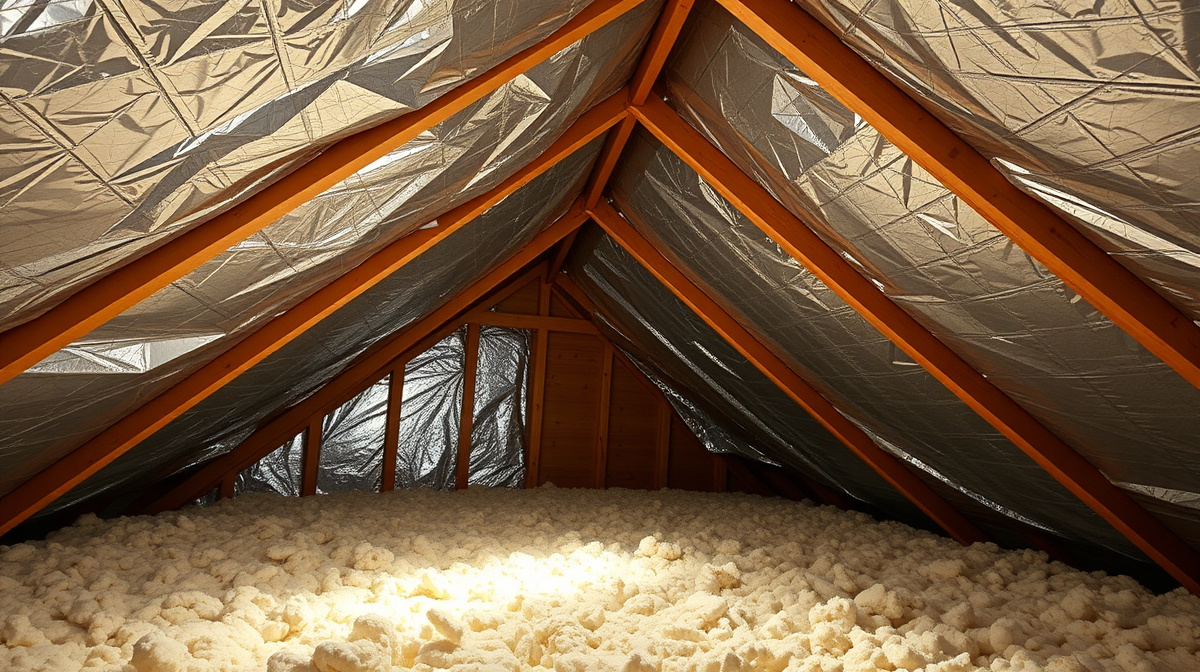
Topping up or replacing attic insulation with blown-in material is the most common project in this market, and one of the most cost-effective. For a typical Dewey-Humboldt or Prescott-area home, an attic top-up with air sealing commonly runs somewhere in the neighborhood of $1,200 to $3,500, depending on square footage, how much depth is needed to reach R-38–R-49, and whether old, degraded, or rodent-contaminated insulation has to come out first. It's also usually the project with the fastest payback given how hard the attic works in both summer and winter here.
Spray foam insulation
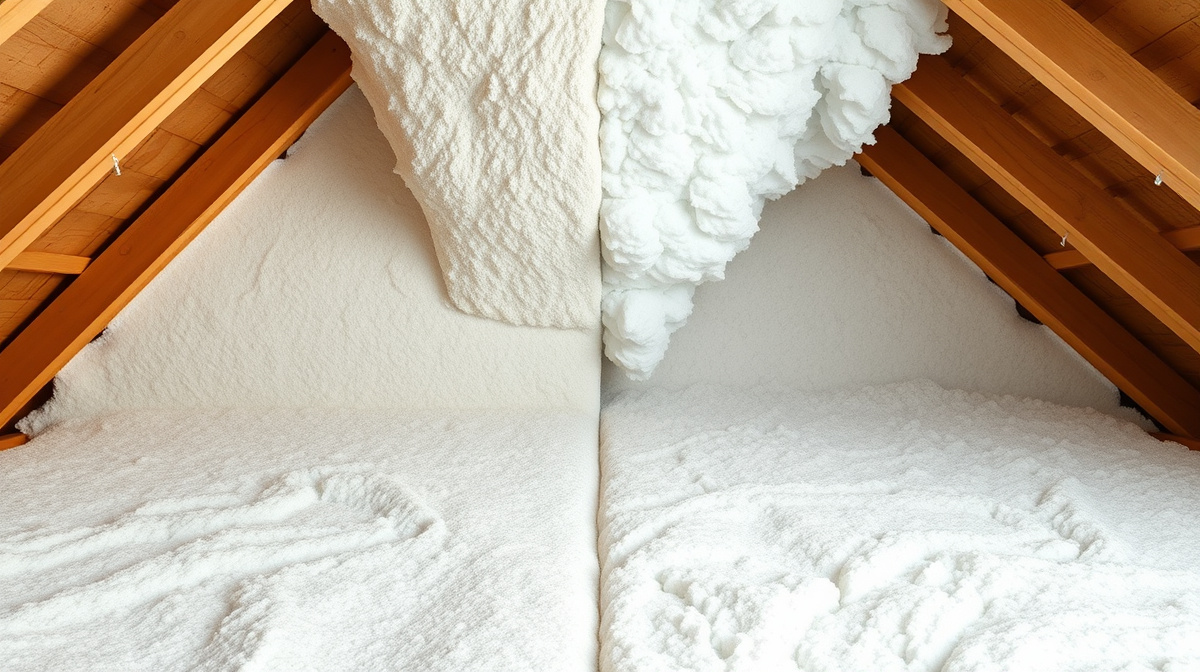
Spray foam costs more per square foot than blown-in or batt because it does more — it insulates and air-seals in a single step and delivers the highest R-value per inch of any common material, typically in the range of R-6 to R-7 per inch for closed-cell foam. Pricing depends heavily on open-cell versus closed-cell and whether you're doing roof-deck application (spraying the underside of the roof to create a sealed, unvented attic) or attic-floor application. Targeted spray foam work — a garage ceiling, a rim area, a problem section of roof deck — might run roughly $1.50 to $5.00 per square foot depending on scope, with closed-cell landing toward the higher end of that band. Larger whole-attic roof-deck projects scale up from there. It's a higher-end product used where its air-sealing performance and heat-blocking power pay off fastest, which in this climate often means garages, additions, and roof decks exposed to direct summer sun.
Batt & roll insulation
Batts — fiberglass or mineral wool — are the economical choice for open wall framing in new construction, additions, and remodels around Prescott Valley and Chino Valley's newer subdivisions. Cost is driven mostly by area and whether you choose standard fiberglass or a higher-end mineral-wool product. Batt insulation is typically the lowest-cost option per square foot, but only when it's installed correctly — the key is snug, gap-free, professionally fitted batts that actually deliver their rated R-value instead of losing a third of it to compression and gaps.
Air sealing
Air sealing is arguably the highest-ROI work you can do in a high-desert home, and it's relatively inexpensive on its own — often a few hundred dollars up to around $1,200 depending on the size and leakiness of the home. Because it's usually bundled into an attic project, it frequently adds modest cost while multiplying the value of every dollar spent on insulation. In a climate with monsoon-season dust and wind-driven moisture on one end and cold, windy winter nights on the other, air sealing matters more here than in a mild coastal climate.
Insulation removal and attic cleanout
Rural and semi-rural Yavapai County properties — think Mayer, Spring Valley, Chino Valley, and outlying Dewey-Humboldt parcels — see a genuine issue with pack rats and rodents nesting in attic insulation. If old insulation is contaminated, compacted, wet, or rodent-damaged, removal is priced by attic size, material volume, and contamination level. It adds to a project, but combining removal with fresh insulation in one visit almost always saves money and hassle compared to doing them separately, and it's often a necessary step before new insulation can perform the way it should.
Air sealing: the step that makes everything else work
Here's the mistake that costs Yavapai County homeowners the most: adding insulation without air sealing first. Insulation slows heat conduction, but it does not stop air movement. If your attic floor is full of gaps — around can lights, top plates, plumbing and wiring penetrations, and a leaky attic hatch — hot summer air and cold winter air move right through and around the insulation you just paid for, and the whole system underdelivers.
That's why we seal first, every time. Sealing the leaks costs far less than the insulation itself and ensures every added R-value dollar actually performs. It also matters for a reason specific to this climate: monsoon-season dust and wind-driven moisture find the same gaps that let conditioned air escape. A well-sealed attic keeps blowing summer dust out of your living space just as effectively as it keeps your air conditioner's output where it belongs.
APS and UniSource Energy rebates: what's realistically available
This is the part most contractors barely mention, and it can meaningfully change the math on a project. Most of Dewey-Humboldt and the greater Prescott area is served primarily by Arizona Public Service (APS), with UniSource Energy also serving portions of Yavapai County. Both utilities have, at various points, offered rebate programs for qualifying insulation, air-sealing, and duct-sealing improvements.
Here's the honest caveat every homeowner should hear: rebate amounts, eligibility rules, and program availability change over time. Utility efficiency programs get updated, paused, and re-funded on their own schedules, and what was available last year isn't guaranteed to be available — or worth the same amount — this year. Rather than quote you a specific dollar figure that may be stale by the time you read this, the right approach is to confirm current program details directly with APS or UniSource, or let us check the current offerings as part of your free estimate. What we can tell you with confidence is that insulation, air sealing, and duct sealing are the kinds of improvements these utility programs have historically targeted, because they reliably reduce the summer cooling load that drives peak electric demand across Yavapai County.
How the audit-first approach helps
Utility rebate programs generally want documentation — proof of your home's existing condition and proof of the work performed, sometimes including a home energy audit or assessment. Starting with an energy audit, rather than jumping straight to a quote, is the move that protects your ability to claim whatever rebate is currently on the table. It also gives you a prioritized, evidence-based list of what to fix first instead of a guess.
The federal 25C tax credit
Separate from utility programs, the federal Energy Efficient Home Improvement Credit — Section 25C of the tax code — is a stable, nationwide incentive that has consistently applied to qualifying insulation and air-sealing materials. As of now, it allows homeowners to claim a credit worth a portion of the cost of qualifying insulation work, up to an annual limit of $1,200 for most home-envelope improvements. Because it's a federal program rather than a regional utility offering, it tends to be more predictable year to year than local rebate programs, though annual limits and qualifying-product rules do apply and can be adjusted by Congress or the IRS.
The practical takeaway: a Yavapai County insulation project can often qualify for the federal 25C credit on top of whatever APS or UniSource incentive is currently available, since they run through different mechanisms. As always, confirm the specifics — qualifying products, documentation requirements, and your own tax situation — with your tax advisor before you count on a specific number.
How to choose the right insulation for your home
There's no single 'best' insulation for a Prescott-area home — there's the best product for each part of the house. The strongest results come from combining materials intelligently, tuned for both our summer heat load and our cold winter nights:
- Attic floor: blown-in cellulose or fiberglass over a properly air-sealed deck, built to R-38–R-49 depending on elevation and existing conditions.
- Roof deck (unvented attic assemblies), garages, and additions: closed-cell spray foam for its air seal, heat-blocking power, and high R-value per inch.
- Open walls in new construction or remodels around Prescott Valley and Chino Valley: batts (fiberglass or mineral wool) installed snug and gap-free.
- Ducts and air handlers living in a hot attic: sealed and insulated separately from the attic floor insulation, since a 150°F attic will degrade duct performance no matter how good the floor insulation is.
- Manufactured and mobile homes in Mayer, Spring Valley, and rural Chino Valley: underbelly and skirting insulation addressed as its own scope, not an afterthought.
A good contractor designs the system, not just the product — and is honest about where a higher-end material like spray foam is worth the extra cost versus where blown-in will do the job for a lot less money.
The mistakes that cost Yavapai County homeowners the most
A handful of avoidable errors show up again and again in Dewey-Humboldt and Prescott-area homes:
- Adding insulation without air sealing first — the single most common and costly mistake in this climate.
- Under-insulating the attic — stopping at R-19 or R-30 when our elevation and heat swing call for R-38 to R-49.
- Poor batt installation — compressed or gapped batts that lose much of their rated R-value.
- Insulating over a problem — covering wet, moldy, or rodent-damaged material instead of removing it first.
- Ignoring ducts in the attic — leaving leaky, poorly insulated ductwork sitting in a 150°F space while focusing only on the attic floor.
- Leaving incentives on the table — not documenting the work or checking current APS, UniSource, and federal 25C eligibility before starting.
- Skipping ventilation — insulating an attic without proper soffit-and-ridge airflow, which can trap heat and moisture instead of managing it.
How long does insulation last, and when should you upgrade?
Quality insulation is a long-term investment. Spray foam and properly installed batts can last the life of the home. Blown-in cellulose and fiberglass last for decades, though loose-fill can settle over time and lose some depth, and any insulation can be compromised by roof leaks, rodent activity, or renovation damage. As a rule, insulation itself rarely 'wears out' on a fixed schedule — but the home around it changes, standards rise, and our brutal summer attic temperatures take a toll on materials that lesser products can't withstand.
The clearer signal that it's time to upgrade is performance, not age. If parts of your home never get comfortable, your summer electric bill keeps climbing, you can feel cold floors or drafts on winter nights, you've noticed dust infiltrating during monsoon season, or you simply know your attic is below R-38, those are all reasons to act regardless of how old the insulation is. Homes built more than 15 or 20 years ago in Dewey-Humboldt, Prescott, and Prescott Valley were often insulated to standards well below what today's high-desert climate targets call for, which means there's usually a worthwhile, cost-effective upgrade waiting in the attic.
Should you DIY or hire a pro?
Some insulation work is genuinely DIY-friendly — a homeowner can add a batt or two in an accessible space, or caulk an obvious gap around a window. But the projects that deliver the biggest gains are the ones where professional work pays off most. Blown-in insulation requires a commercial-grade blower and the experience to install to an even, verified depth across an entire attic — not just around the hatch where it's easy to reach. Spray foam has to be applied at the correct ratio, thickness, and substrate temperature to cure properly, especially in our heat, which makes it a genuinely professional-only product. And effective air sealing depends on knowing where a high-desert home actually leaks, which is where an experienced eye and the right tools earn their keep.
There's also the incentive angle: many APS, UniSource, and federal 25C requirements assume qualifying products and, in some cases, professional installation and documentation, so a DIY job can forfeit incentives that would have offset much of a professional job's cost. For the high-impact work — attic systems, spray foam, and whole-home air sealing — hiring a pro usually delivers better performance, better-captured incentives, and a result that actually lasts through Yavapai County summers and winters alike. We're always happy to tell you honestly which parts of a project you could reasonably tackle yourself and which are worth leaving to a crew.
Getting it right — and getting it for less
The best insulation project isn't the cheapest one or the one with the most spray foam — it's the right materials, in the right places, over a properly air-sealed envelope, built to the R-values our elevation and climate actually demand, with every current incentive checked and captured. Done well, it makes a Dewey-Humboldt or Prescott-area home noticeably more comfortable through both a 105°F July afternoon and a 25°F January night, meaningfully cheaper to run, and it pays for itself faster than almost any other home improvement.
That's exactly what we focus on. We're a local insulation contractor based in Dewey-Humboldt, serving Prescott, Prescott Valley, Chino Valley, Cottonwood, Jerome, Mayer, and Spring Valley — spray foam, blown-in, batt, attic systems, air sealing, removal, and energy audits, with current rebate guidance built into every estimate. Tell us about your home and we'll put together a free, no-pressure quote that shows you the real numbers for your house. Call 844-967-5247 to get started.
Frequently asked questions
For a typical high-desert home, an attic top-up with air sealing commonly runs somewhere around $1,200 to $3,500, depending on square footage, the depth needed to reach R-38–R-49, and whether old or rodent-contaminated insulation needs to come out first. A free on-site estimate gets you an exact, itemized number for your house.
Most Dewey-Humboldt and Prescott-area homes should target R-38 to R-49 in the attic, with higher-elevation homes often landing at the upper end of that range. Many existing attics sit at R-19 to R-30, which leaves real comfort and savings on the table given how hard local attics work in both summer heat and cold winter nights.
Utility rebate amounts and eligibility rules change over time, so we can't promise a specific figure — always confirm current APS or UniSource program details before budgeting around a number. The federal 25C Energy Efficient Home Improvement Credit is more stable and can often be claimed on top of a utility incentive since it runs through a separate mechanism, currently up to $1,200 per year for qualifying insulation work. Confirm the specifics with your tax advisor.
Ready for a free quote?
Tell us about your home and we'll build a clear quote — rebates included.