Attic Insulation in Dewey-Humboldt & Prescott, AZ
The single highest-impact insulation upgrade for a Yavapai County home — your attic accounts for roughly 60-70% of the potential energy savings available in a typical retrofit.
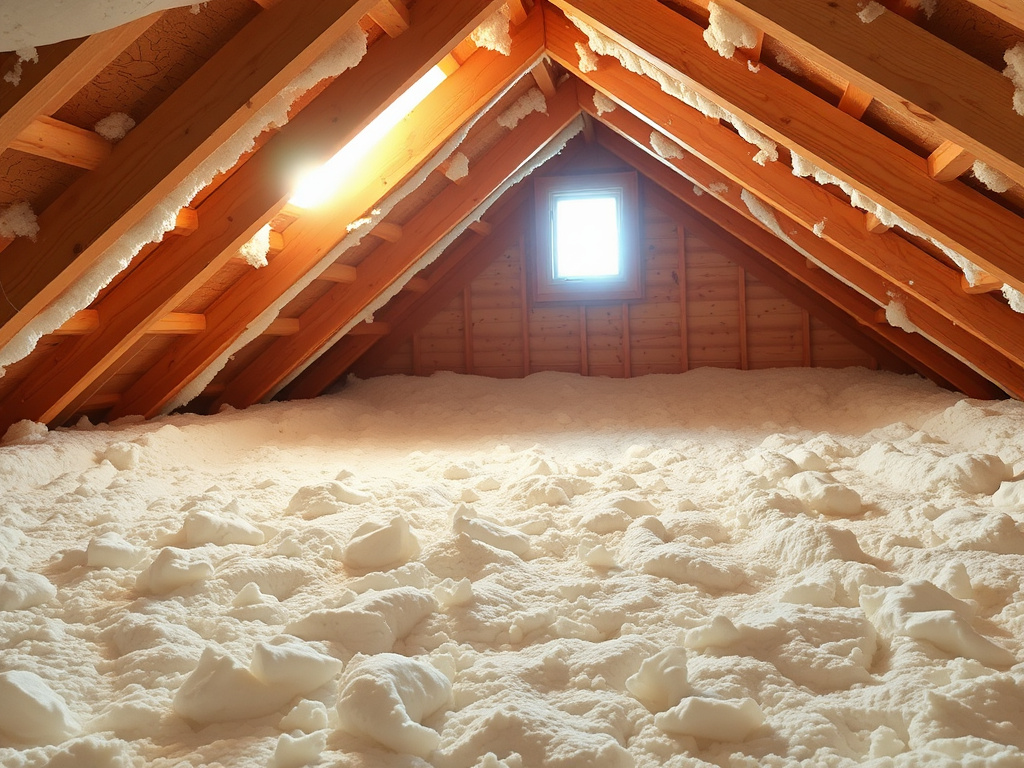
If you upgrade one thing in your home, make it the attic. In Dewey-Humboldt, Prescott, and every community across Yavapai County, the attic is where the biggest share of a home's energy waste happens — a poorly insulated attic lets summer heat pour down into living space while your AC fights a losing battle against a 140-160°F space directly above your ceiling, and it lets that same gap bleed heat right back out on cold high-desert nights. Industry data consistently points to the attic as roughly 60-70% of a home's total potential energy-savings opportunity, more than any other single upgrade.
We inspect your existing attic insulation — depth, material, condition, and any signs of pest damage or moisture — before recommending a plan. Most homes in this area should target R-38 to R-49+ depending on your current insulation, roof design, and elevation, and we'll walk you through exactly what that means for your specific attic rather than quoting a generic number off a brochure.
Why homeowners choose it
- Attic insulation delivers the highest energy-savings return of any home insulation upgrade
- Cuts summer cooling costs by reducing radiant heat transfer from a 140-160°F attic
- Reduces heat loss through the ceiling plane on cold high-desert winter nights
- Evens out room-to-room temperature swings between floors
- Reduces strain on HVAC systems and ductwork, especially when ducts run through the attic
- Often qualifies for APS/UniSource rebates and the federal 25C tax credit
Why the attic matters most in this climate
Heat moves toward cold and away from hot, and in a Yavapai County summer, your attic is a genuine extreme — regularly hitting 140-160°F under direct high-altitude sun. That heat radiates down through your ceiling all day, forcing your AC to work overtime just to hold the line. Then, because we're not low-desert Phoenix, the same house faces real cold on clear high-desert nights, sometimes dropping into the 20s, with 30-40°F+ swings between day and night being completely normal here. An underinsulated attic loses ground on both ends of that swing.
That's why the attic consistently delivers the largest share of energy savings in a retrofit — it's the single largest, most exposed surface between conditioned space and the outdoors, and it's exposed to the most extreme temperature differential of any part of the house.
- Attics regularly hit 140-160°F in Yavapai County summers
- High-desert nights can drop into the 20s°F with 30-40°F+ daily swings
- The attic typically represents 60-70% of a home's total energy-savings potential
- Elevation (Prescott ~5,300 ft) increases thermal demand versus low-desert Phoenix
Choosing between blown-in, batt, and spray foam for your attic
Most attic-floor upgrades in this market use blown-in cellulose or fiberglass because it fills irregular framing completely and reaches target R-values efficiently. Spray foam on the roof deck is the right call when ducts and HVAC equipment live in the attic and need protection from extreme heat. Batts are rarely the ideal choice for attic floors here — they're better suited to wall cavities — though we'll use whatever combination actually performs best for your specific attic rather than defaulting to one product.
We also check and correct ventilation as part of the job — soffit and ridge airflow needs to stay clear regardless of which insulation product goes down, so heat and moisture can still escape the attic space itself.
R-38 to R-49+ targets by home and elevation
There's no single right number for every home — your target depends on existing insulation depth, roof design, ceiling type, and elevation. As a general guide, most Dewey-Humboldt and Prescott-area attics should land between R-38 and R-49, with some homes benefiting from pushing higher depending on specifics. We measure your attic and existing insulation on-site and give you a specific, justified target rather than a one-size-fits-all figure.
We'll also flag if a radiant barrier or additional attic ventilation would meaningfully improve results alongside insulation — the two work together, not as substitutes for each other.
Ideal for
- Homes with visible, thin, or compressed existing attic insulation
- Upstairs rooms that run noticeably hotter in summer or colder in winter
- Homes with ducts and HVAC equipment located in the attic
- Anyone preparing for an energy audit or planning to claim rebates/tax credits
- Pre-sale upgrades to boost a home's efficiency profile and marketability
What affects the cost
Attic Insulation questions, answered
A typical attic retrofit runs from a few hundred dollars for a small top-off to a few thousand for a full removal-and-reinsulation job, depending on square footage, target R-value, and insulation type. We give firm numbers after an on-site inspection rather than a phone estimate.
Signs include visibly thin or compressed insulation, uneven room temperatures, rising summer cooling bills, visible daylight through the roof deck from inside the attic, or signs of rodent activity like droppings, tunneling, or nesting material. A quick inspection can tell you where you stand.
Most homes in this area should target R-38 to R-49 depending on existing insulation, roof design, and elevation. Prescott's roughly 5,300-foot elevation puts real thermal demand on a home that generic low-desert Phoenix advice doesn't account for — we measure and recommend a specific target for your attic.
Proper attic insulation slows heat transfer in both directions — it keeps scorching afternoon attic heat from radiating into your living space, and it holds conditioned air in when temperatures drop sharply at night. That's exactly the kind of two-way protection homes need at high-desert elevation, versus a climate that only runs hot or only runs cold.
Attic Insulation done right, by a local Dewey-Humboldt crew
Attic Insulation isn't a commodity — the result depends entirely on how carefully it's planned and installed for your specific home and Yavapai County's high-desert climate. We assess what your house actually needs, prep and air-seal properly, and install to your target R-value, so the work delivers the comfort and savings it's supposed to. No shortcuts, no builder-grade rush.
We serve Dewey-Humboldt, Prescott, Prescott Valley, Chino Valley, Cottonwood, Jerome, Mayer, Spring Valley, and the rest of the greater Prescott area, and we'll help you find the current APS and UniSource rebates that bring your project cost down. Every job starts with a free, no-pressure quote.
Just as important, we treat your home like the system it is. Insulation, air sealing, ventilation, and moisture control all interact, and getting one right while ignoring the others leaves comfort and savings on the table. When we scope your attic insulation, we look at how it fits the whole picture — so the finished result performs the way it should, holds up through both 150°F+ summer attics and cold high-desert winter nights, and actually lowers the bills you feel every month. That whole-home mindset, plus honest advice about what your house truly needs, is what our neighbors across Yavapai County count on us for.
Free assessment
We evaluate your home and give you a clear, itemized quote with rebates factored in.
Expert install
We prep, air seal, and install your attic insulation to spec — clean and on schedule.
Savings you can feel
A more comfortable home, lower bills, and help claiming every rebate you qualify for.
Related services
Ready for a free attic insulation quote?
Tell us about your home and we'll put together a clear, no-pressure quote — plus show you which APS & UniSource rebates you qualify for.