Blown-In Insulation in Dewey-Humboldt & Prescott, AZ
Loose-fill cellulose or fiberglass, blown to fill every gap in irregular attic framing — the most common and cost-effective way to bring a Yavapai County attic up to R-38 to R-49.
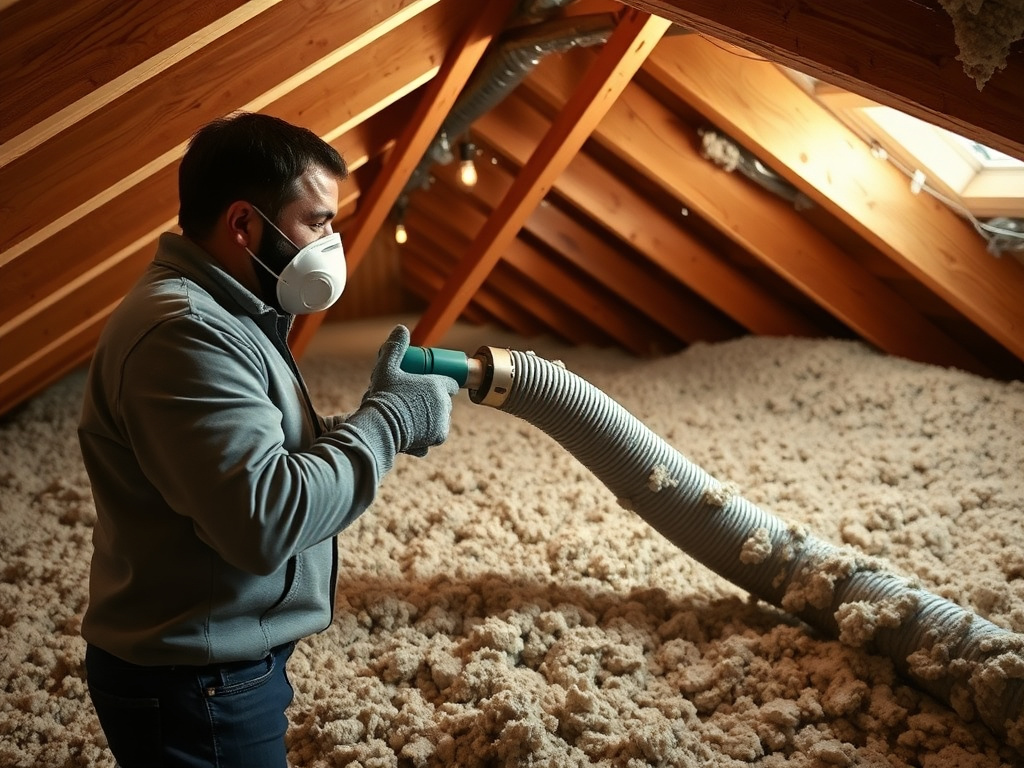
Blown-in insulation is the workhorse of attic upgrades across Dewey-Humboldt, Prescott, and the surrounding high-desert communities. Loose-fill cellulose or fiberglass is blown in to a uniform depth, filling around wiring, framing irregularities, and hard-to-reach corners that batts simply skip over. For an attic that's going to spend summer afternoons at 140-160°F and winter nights well below freezing, full, even coverage without gaps is what actually protects your comfort and your energy bill — a batt with a half-inch gap at every joist bay isn't doing its job.
We install both cellulose and fiberglass and will tell you honestly which one fits your attic, your budget, and your climate exposure — because in extreme attic heat, the two materials don't perform identically. Most Yavapai County attics land between R-38 and R-49 depending on existing insulation, roof design, and elevation, and we size every job to your specific attic rather than a one-size-fits-all number.
Why homeowners choose it
- Fills irregular framing and gaps that batts leave exposed
- Fast installation — most attics are completed in a single day
- Cellulose holds its R-value better than fiberglass under sustained high heat
- Cost-effective way to reach R-38 to R-49 attic targets
- Reduces noise transfer and adds a degree of pest-deterrent density (cellulose is treated with borate)
- Works well as a top-up over existing insulation that's simply too thin
Cellulose vs. fiberglass in extreme attic heat
This is the single most important material decision for a Yavapai County attic, and it's one most competitors don't explain. In sustained high-heat conditions — the kind our attics see every summer afternoon — cellulose holds its rated R-value more consistently than fiberglass, which is more prone to losing effective performance as attic temperatures climb. Cellulose is denser, made from treated recycled paper fiber, and settles into a more continuous, gap-free layer that resists convective heat movement within the insulation itself.
Fiberglass still has a place — it's a proven, moisture-tolerant product and can be the right call in certain attic configurations or budget scenarios. But if your top priority is minimizing summer cooling load in a 140°F+ attic, cellulose is generally the stronger long-term performer, and we'll say so plainly during your estimate rather than upselling whichever product happens to be in the truck.
- Cellulose: denser, borate-treated, holds R-value better under sustained heat
- Fiberglass: lighter, moisture-tolerant, budget-friendly in the right application
- Both are blown to depth to hit your target R-value, not just a bag count
- We measure and disclose actual installed depth, not just estimated coverage
Targeting R-38 to R-49 for high-desert elevation
Most Dewey-Humboldt and Prescott-area attics should target somewhere between R-38 and R-49 depending on your home's existing insulation, roof design, and elevation — Prescott itself sits around 5,300 feet, and homes at that elevation see a genuinely different thermal load than low-desert Phoenix, where a lot of generic 'Arizona insulation' advice actually comes from. We measure your existing insulation depth and condition first, then calculate exactly how much material is needed to reach your target rather than guessing.
Going well beyond R-49 rarely pays for itself in this climate — there's a real point of diminishing returns, and we'll tell you when you've reached it instead of selling you more material than your attic needs.
Topping off vs. full attic re-insulation
If your existing insulation is clean, dry, and evenly distributed but just too thin, a top-off blow is often the most cost-effective path to a higher R-value — we don't need to remove what's already doing its job. If existing insulation is compressed, water-damaged, rodent-contaminated, or wildly uneven in depth, a full removal and re-blow (see our insulation removal service) gives a more reliable, verifiable result.
We'll inspect before quoting either way, so you're not paying to bury a problem under new material.
Ideal for
- Attics with irregular framing, trusses, or lots of penetrations
- Homes with thin, aging, or unevenly distributed existing insulation
- Budget-conscious upgrades that still need real R-value gains
- Ranch and single-story homes across Chino Valley, Mayer, and Spring Valley with large, open attic footprints
- Anyone topping off insulation before a home sale or energy audit
What affects the cost
Blown-In Insulation questions, answered
Blown-in cellulose or fiberglass generally costs less per square foot than spray foam, since it's a faster installation with lower material cost per R-value point — though spray foam adds air-sealing that blown-in alone doesn't. We're happy to quote both so you can compare directly for your attic.
Fiberglass can lose more of its effective R-value performance under sustained high-heat conditions than cellulose does, which is worth factoring in for a Yavapai County attic that regularly sees 140-160°F summer afternoons. Cellulose's density and borate treatment give it an edge in that specific scenario.
Most homes in this area should target R-38 to R-49 depending on your existing insulation, roof design, and elevation — Prescott's roughly 5,300 feet puts real thermal demand on a home beyond what generic low-desert Phoenix advice accounts for. We measure your attic and recommend a specific number, not a blanket figure.
Yes, there's a point of diminishing returns — pushing well past R-49 in most Yavapai County attics rarely pays back in real savings. We'll tell you when you've hit the sweet spot rather than selling extra material past that point.
Blown-In Insulation done right, by a local Dewey-Humboldt crew
Blown-In Insulation isn't a commodity — the result depends entirely on how carefully it's planned and installed for your specific home and Yavapai County's high-desert climate. We assess what your house actually needs, prep and air-seal properly, and install to your target R-value, so the work delivers the comfort and savings it's supposed to. No shortcuts, no builder-grade rush.
We serve Dewey-Humboldt, Prescott, Prescott Valley, Chino Valley, Cottonwood, Jerome, Mayer, Spring Valley, and the rest of the greater Prescott area, and we'll help you find the current APS and UniSource rebates that bring your project cost down. Every job starts with a free, no-pressure quote.
Just as important, we treat your home like the system it is. Insulation, air sealing, ventilation, and moisture control all interact, and getting one right while ignoring the others leaves comfort and savings on the table. When we scope your blown-in insulation, we look at how it fits the whole picture — so the finished result performs the way it should, holds up through both 150°F+ summer attics and cold high-desert winter nights, and actually lowers the bills you feel every month. That whole-home mindset, plus honest advice about what your house truly needs, is what our neighbors across Yavapai County count on us for.
Free assessment
We evaluate your home and give you a clear, itemized quote with rebates factored in.
Expert install
We prep, air seal, and install your blown-in insulation to spec — clean and on schedule.
Savings you can feel
A more comfortable home, lower bills, and help claiming every rebate you qualify for.
Related services
Ready for a free blown-in insulation quote?
Tell us about your home and we'll put together a clear, no-pressure quote — plus show you which APS & UniSource rebates you qualify for.