Batt & Roll Insulation in Dewey-Humboldt & Prescott, AZ
Fiberglass and mineral wool batts, precisely cut and fit for wall cavities, garages, and new-construction framing — a proven, budget-friendly option where blown-in or spray foam aren't the right tool.
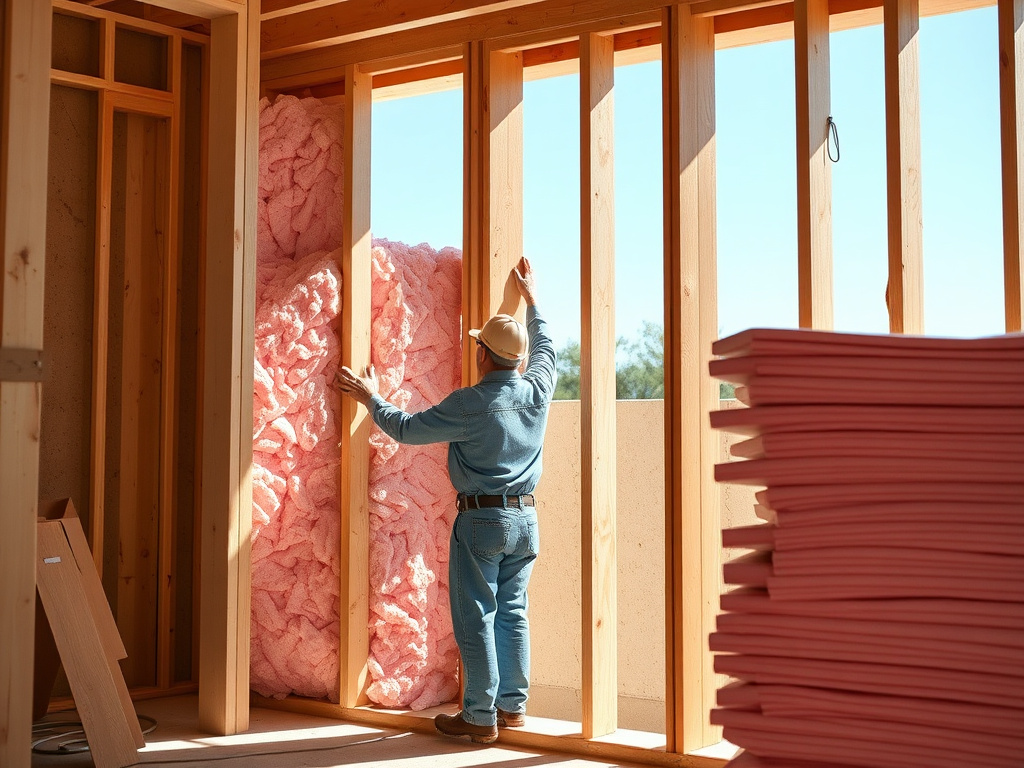
Batt and roll insulation — fiberglass or mineral wool cut to fit standard framing cavities — remains one of the most reliable, cost-effective insulation products around, and it's still the right choice for plenty of applications across Dewey-Humboldt and the greater Prescott area: wall cavities during a remodel, garage stud bays, new-construction framing, and interior sound-dampening walls. The key to batt performance is precision — a batt that's compressed, gapped, or cut short loses a meaningful chunk of its rated R-value, so fit matters as much as the product itself.
We install batts with attention to full cavity fill and clean cuts around outlets, wiring, and plumbing penetrations — the details that separate a batt job that actually performs from one that just looks installed. For new builds and additions across Prescott Valley and Chino Valley, we can also spec mineral wool where fire-resistance or sound control is a priority.
Why homeowners choose it
- Budget-friendly R-value for walls and standard framing cavities
- Straightforward installation with minimal disruption for remodels
- Mineral wool option adds fire-resistance and sound-dampening properties
- Works well in new-construction cavities during the framing stage
- Predictable, code-friendly R-value per product thickness
- Good fit for garage walls and interior partition sound control
Fiberglass vs. mineral wool for Yavapai County walls
Fiberglass batts are the standard, affordable choice for most wall and cavity applications, delivering consistent R-value at a lower material cost. Mineral wool (rock wool) costs more but brings real advantages where they matter — better fire resistance, superior sound-dampening between rooms or floors, and better moisture tolerance, which is worth considering in monsoon-exposed exterior walls or wildfire-urban-interface locations near Prescott National Forest where every layer of fire-resistant material adds a margin of protection.
For most standard interior walls and garage cavities, fiberglass does the job well. For exterior walls in WUI-adjacent properties, party walls, or media/bedroom sound isolation, mineral wool is worth the upgrade — we'll lay out the cost difference plainly so you can decide.
- Fiberglass: lowest cost, proven performance, standard R-13 to R-21 wall cavities
- Mineral wool: fire-resistant, sound-dampening, better moisture tolerance
- Both require full cavity fill with no compression to hit rated R-value
- Careful cutting around outlets and plumbing prevents thermal gaps
Getting the install right — fit is everything
A batt that's compressed to fit a cavity it's slightly too thick for loses R-value immediately — this is one of the most common installation mistakes in the trade, done by crews trying to move fast. We measure and cut to the actual cavity depth, split batts cleanly around wiring and boxes instead of just stuffing material around them, and make sure there are no compressed corners or missed gaps at the top and bottom plates.
For new construction, this means coordinating with your framing schedule so batts go in cleanly before drywall, with attention to air-sealing penetrations first (see our air sealing service) so the insulation isn't fighting air leaks it can't stop on its own.
Where batts fit into a whole-home insulation plan
Batts are rarely the right call for attic floors in this climate — blown-in cellulose or fiberglass fills irregular attic framing far more completely, and spray foam outperforms batts on air-sealing. But for standard-depth wall cavities, garages, and new-construction framing, batts remain a smart, well-proven part of a whole-home plan. We're happy to combine batts in walls with blown-in in the attic on the same job to get the right product in the right place.
Ideal for
- Interior and exterior wall cavities during a remodel or addition
- New-construction framing across Prescott Valley and Chino Valley builds
- Garage stud walls needing a budget-conscious upgrade
- Interior partition walls where sound control matters more than thermal performance
- Homeowners who want a proven, well-understood product over specialty foam
What affects the cost
Batt & Roll Insulation questions, answered
For standard wall cavities and new-construction framing, batts perform well when installed correctly. For attic floors with irregular framing, blown-in cellulose or fiberglass generally fills gaps more completely and is the better choice — we typically recommend batts for walls and blown-in for attics.
Fiberglass is the standard, budget-friendly option with solid thermal performance. Mineral wool costs more but adds fire resistance and better sound-dampening, which can be worth it for exterior walls in wildfire-urban-interface areas near Prescott National Forest or for interior sound isolation.
Yes — fiberglass or mineral wool batts work well in garage stud walls as a budget-conscious option. If the garage is a workshop, gym, or shares significant wall area with living space, closed-cell spray foam will outperform batts on both R-value per inch and moisture resistance.
Compressing a batt to fit a shallower space than it's rated for reduces its effective R-value — sometimes significantly. Correct installation means cutting batts to the actual cavity depth rather than squeezing them in, which is a detail we're careful about on every job.
Batt & Roll Insulation done right, by a local Dewey-Humboldt crew
Batt & Roll Insulation isn't a commodity — the result depends entirely on how carefully it's planned and installed for your specific home and Yavapai County's high-desert climate. We assess what your house actually needs, prep and air-seal properly, and install to your target R-value, so the work delivers the comfort and savings it's supposed to. No shortcuts, no builder-grade rush.
We serve Dewey-Humboldt, Prescott, Prescott Valley, Chino Valley, Cottonwood, Jerome, Mayer, Spring Valley, and the rest of the greater Prescott area, and we'll help you find the current APS and UniSource rebates that bring your project cost down. Every job starts with a free, no-pressure quote.
Just as important, we treat your home like the system it is. Insulation, air sealing, ventilation, and moisture control all interact, and getting one right while ignoring the others leaves comfort and savings on the table. When we scope your batt & roll insulation, we look at how it fits the whole picture — so the finished result performs the way it should, holds up through both 150°F+ summer attics and cold high-desert winter nights, and actually lowers the bills you feel every month. That whole-home mindset, plus honest advice about what your house truly needs, is what our neighbors across Yavapai County count on us for.
Free assessment
We evaluate your home and give you a clear, itemized quote with rebates factored in.
Expert install
We prep, air seal, and install your batt & roll insulation to spec — clean and on schedule.
Savings you can feel
A more comfortable home, lower bills, and help claiming every rebate you qualify for.
Related services
Ready for a free batt & roll insulation quote?
Tell us about your home and we'll put together a clear, no-pressure quote — plus show you which APS & UniSource rebates you qualify for.