Radiant Barrier & Attic Ventilation in Dewey-Humboldt & Prescott, AZ
A reflective radiant barrier bounces radiant heat away before it ever enters your attic, and proper soffit-and-ridge ventilation clears what heat remains — a genuine Arizona-specific upgrade that complements insulation instead of replacing it.
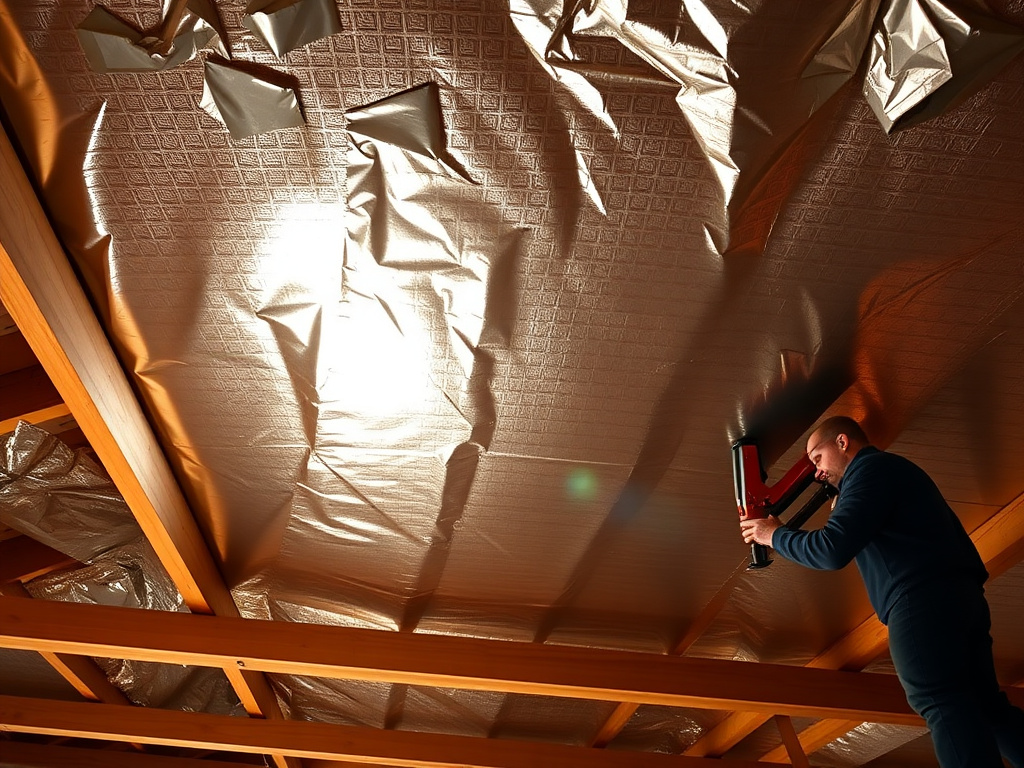
Most insulation slows heat that's already trying to move through your ceiling. A radiant barrier works differently — it's a reflective material, typically installed under the roof deck or draped over attic-floor insulation, that reflects a significant share of radiant heat away before it ever fully enters the attic space. In a climate where attics regularly hit 140-160°F under direct high-altitude sun, that reflection matters, and it's one of the more underused upgrades among Yavapai County contractors despite being genuinely well suited to this exact climate.
We pair radiant barrier installation with an honest look at your attic ventilation — soffit intake and ridge exhaust need to be clear and correctly sized for either product to do its job well. A radiant barrier or extra insulation in a poorly ventilated attic is fighting an uphill battle; heat and moisture need somewhere to go. We treat radiant barrier and ventilation as a complement to insulation, not a substitute for it — the two systems solve different parts of the same problem.
Why homeowners choose it
- Reflects radiant heat before it fully enters the attic space
- Reduces peak attic temperatures during the hottest summer afternoons
- Complements existing insulation rather than replacing it
- Proper soffit/ridge ventilation clears residual heat and monsoon-season humidity
- Can ease cooling load on HVAC systems and ductwork located in the attic
- A genuinely underused upgrade in this market — most local competitors barely mention it
How a radiant barrier actually works in an Arizona attic
A radiant barrier is a reflective foil-faced material, typically stapled to the underside of roof rafters or laid over existing attic-floor insulation, that reflects radiant heat rather than absorbing and re-emitting it the way a standard roof deck does. In direct high-altitude Arizona sun, a significant share of the heat reaching your attic arrives as radiant energy — which is exactly the type of heat transfer a radiant barrier is built to interrupt. The result is a measurably cooler attic space during peak summer afternoons.
It works best on roof decks with a clean air gap on the reflective side, so we pay attention to installation orientation and existing insulation layout rather than just stapling material up and calling it done.
- Reflects radiant heat before it transfers into the attic space
- Most effective on south- and west-facing roof exposures
- Installed under the roof deck or over attic-floor insulation, depending on layout
- Works alongside insulation — it's a complement, not a replacement
Should you add a radiant barrier, more insulation, or both?
This is one of the most common questions we get, and the honest answer is: it depends on what your attic is missing. If your insulation is thin or below target R-value, insulation is the first priority — it's doing the bulk of the work of slowing heat transfer year-round. If your insulation is already solid and your attic is still running extremely hot, a radiant barrier can meaningfully knock down peak attic temperatures further, particularly on roofs with strong direct sun exposure.
For a lot of Dewey-Humboldt and Prescott-area homes with ducts in the attic, doing both — bringing insulation up to target and adding a radiant barrier — delivers the best combined result, since you're addressing conductive heat transfer and radiant heat transfer separately.
Attic ventilation: soffit intake and ridge exhaust
Insulation and radiant barrier both work better in an attic that can actually breathe. Soffit vents pull cooler outside air in at the eaves, and ridge vents let hot air escape at the peak, creating natural airflow that clears residual heat and, during monsoon season, helps manage humidity that builds up in a sealed, stagnant attic. Blocked soffits — often from insulation installed without baffles, or from bird and rodent nesting material — are one of the most common ventilation problems we find in older Yavapai County homes.
We check and, where needed, correct ventilation as part of any attic insulation or radiant barrier job, since underventilated attics undercut the performance of whatever else you've invested in.
Ideal for
- Homes with well-insulated attics that are still running hot in summer
- South- and west-facing roof exposures taking the most direct high-altitude sun
- Homes with ducts or HVAC equipment in the attic needing extra heat protection
- Attics with blocked, undersized, or missing soffit and ridge ventilation
- Homeowners who've already insulated and want the next layer of summer heat relief
What affects the cost
Radiant Barrier & Ventilation questions, answered
Yes — radiant barriers reflect radiant heat, which is a significant share of the heat load reaching Arizona attics under direct high-altitude sun. It won't replace insulation, but it measurably reduces peak attic temperatures, especially on south- and west-facing roof exposures.
If your insulation is below target R-value, start there — it does the bulk of the year-round work. If insulation is already solid and the attic still runs hot, a radiant barrier adds meaningful additional relief. Many Yavapai County homes with ducts in the attic benefit most from doing both.
Possibly — insulation and radiant barrier both perform better in a well-ventilated attic. Blocked soffit or ridge vents trap heat and monsoon-season humidity, undercutting whatever insulation upgrade you've made. We check ventilation as part of every attic job.
No — the two solve different problems. Insulation slows conductive and convective heat transfer over time; radiant barrier reflects radiant heat before it fully enters the space. They work best installed together, not as substitutes for one another.
Radiant Barrier & Ventilation done right, by a local Dewey-Humboldt crew
Radiant Barrier & Ventilation isn't a commodity — the result depends entirely on how carefully it's planned and installed for your specific home and Yavapai County's high-desert climate. We assess what your house actually needs, prep and air-seal properly, and install to your target R-value, so the work delivers the comfort and savings it's supposed to. No shortcuts, no builder-grade rush.
We serve Dewey-Humboldt, Prescott, Prescott Valley, Chino Valley, Cottonwood, Jerome, Mayer, Spring Valley, and the rest of the greater Prescott area, and we'll help you find the current APS and UniSource rebates that bring your project cost down. Every job starts with a free, no-pressure quote.
Just as important, we treat your home like the system it is. Insulation, air sealing, ventilation, and moisture control all interact, and getting one right while ignoring the others leaves comfort and savings on the table. When we scope your radiant barrier & ventilation, we look at how it fits the whole picture — so the finished result performs the way it should, holds up through both 150°F+ summer attics and cold high-desert winter nights, and actually lowers the bills you feel every month. That whole-home mindset, plus honest advice about what your house truly needs, is what our neighbors across Yavapai County count on us for.
Free assessment
We evaluate your home and give you a clear, itemized quote with rebates factored in.
Expert install
We prep, air seal, and install your radiant barrier & ventilation to spec — clean and on schedule.
Savings you can feel
A more comfortable home, lower bills, and help claiming every rebate you qualify for.
Related services
Ready for a free radiant barrier & ventilation quote?
Tell us about your home and we'll put together a clear, no-pressure quote — plus show you which APS & UniSource rebates you qualify for.